
Chisago County Criminal Case Files
Chisago County criminal court records are filed in Chisago County District Court, part of Minnesota's Tenth Judicial District. District Court is the local trial court for criminal matters in the county. A criminal file can include the complaint, probable-cause statement when public, statute citations, charge counts, Rule 8 or initial appearance events, arraignment, omnibus or pretrial entries, motions, plea hearings, verdict or plea outcomes, sentencing entries, probation violation hearings, restitution, warrants or holds where shown, financial obligations, and final orders.
The case file is broader than a charge list. The charge list explains the alleged offenses. The full criminal court record shows how each count moves through court. Some counts may be amended, reduced, dismissed, or resolved by plea or verdict. A reader looking only for filed charges may also need the arrest-to-charge discussion in Chisago County arrest records and charges, but the criminal court record is the place to confirm court events and outcomes.
Chisago County Criminal Record Flow
A criminal case in Chisago County usually moves from filed charges into early court appearances, then to pretrial work, plea or trial, disposition, and sentencing. The public calendar examples include Initial Appearance - Rule 8, pre-trial, plea hearing, sentencing, probation violation hearing, restitution hearing, and arraignment. The exact path varies by severity, plea negotiations, motions, and court orders.
Case Flow: Charges Filed > Arraignment or Rule 8 > Pretrial > Plea or Trial > Disposition > Sentencing.
That flow is a reading aid, not a promise that every case has each event. Some misdemeanor or petty matters may resolve by payment or plea. Some felony or gross misdemeanor matters can have more hearings, motions, competency issues, restitution hearings, probation violations, or warrants. The record should be read count by count and event by event.
Search Chisago County Criminal Records
MCRO Case Search is the main online system for public Chisago County criminal court records. Case Search can use name, case number, citation number, or attorney search paths. For local results, select the county-location filter and choose Chisago County. Chisago criminal case numbers in the research examples use the 13-CR format, such as 13-CR-25-401. Pending criminal, traffic, and petty misdemeanor cases with no conviction may not return by defendant-name search, so a case number is stronger when available.
- Open MCRO Case Search and select Name or Case Number.
- Use Case Number for a known Chisago 13-CR case or a pending case that may not return by name.
- Filter court locations to Chisago County when searching by name.
- Open the case result and review the register of actions, charge entries, hearings, and public documents.
- Use Court Administration for certified copies, courthouse-only records, and older documents not available online.
What Chisago County Criminal Records Show
The criminal record should be read as a case history. A filed charge does not equal a conviction. The record may show one arrest-related case with multiple counts, different severity levels, and different outcomes. It may also show financial obligations, restitution, bail or bond information, hearing dates, and later probation violation events. Public documents depend on case type, filing date, document type, and remote-access rules.
| Field | What It Shows |
|---|---|
| Case Number | Chisago criminal files commonly use the 13-CR prefix and year/sequence format. |
| Defendant and Attorneys | Party and attorney information where public; attorney-name and license-number searches may help locate cases. |
| Charges | Offense description, statute citation, count, severity, and later amendments or dismissals when entered. |
| Hearings | Rule 8, arraignment, pretrial, plea, sentencing, restitution, probation violation, and review events. |
| Register of Actions | The chronological docket of filings, notices, court events, orders, dispositions, and financial activity. |
| Disposition | The outcome of each charge or case event, including plea, verdict, dismissal, or other resolution. |
| Sentence | Court-ordered punishment or conditions, which may include jail, probation, fines, fees, restitution, or conditions. |
| Financials | Fines, surcharges, restitution, payment status, and collection activity where public. |
Chisago County Charges vs Convictions
A charge is an accusation filed with the court. A conviction is the result of a guilty plea, guilty verdict, or other conviction entry. The difference matters in Chisago County criminal court records because a record can show charges that were later dismissed, reduced, amended, or resolved differently count by count. Reading only the first charge entry can distort the outcome of the case.
| Charge | Conviction | |
|---|---|---|
| Stage | Filed accusation after complaint, citation, or other charging document. | Final or resolved court outcome after plea or verdict. |
| Proof level | Based on probable cause or filed allegations. | Based on plea, verdict, or conviction entry. |
| Record reading | Check status, amendments, dismissals, and count number. | Check disposition and sentence entries for the specific count. |
| Meaning | Does not establish guilt by itself. | Reflects a court outcome, subject to appeal, stay, or later expungement. |
County Attorney and Complaints
Minnesota county prosecutors are county attorneys. The Chisago County Attorney page lists Janet Reiter and places the office at 313 N Main St, Suite 370, Center City, MN 55012, phone 651-213-8400. The Sheriff's Records Management page says that if a requested report is a criminal complaint, it may need to be obtained by calling the County Attorney's Office. That detail matters because the sheriff may hold incident or arrest records, while the formal complaint may be tied to the prosecutor or court file once charges are filed.
Once the complaint is filed in District Court, MCRO and Chisago Court Administration become the main court-record channels. If the document is not available remotely, the case may still show a register entry. Certified copies, exemplified copies, or older filed documents go through Court Administration. The County Attorney can be relevant for complaint questions, victim-witness contact, and prosecution records that are not simply public court documents.
Sealed and Expunged Criminal Records
Minnesota uses expungement to seal criminal records from ordinary public disclosure, subject to court orders and statutory access exceptions. Minnesota Statutes chapter 609A governs criminal expungement. Section 609A.015 provides automatic expungement eligibility for some records, while court-ordered expungement may require petition, service, and judicial review. The Chisago fee schedule lists criminal expungement at $320 unless waived or not required.
| Sealed | Expunged | |
|---|---|---|
| Public visibility | Hidden from ordinary public access. | Sealed through Minnesota expungement law from ordinary public disclosure. |
| Legal effect | Access may still exist by court order or statute. | Disclosure is barred except under court order or statutory authority. |
| Eligibility | Depends on case type, rule, order, and record classification. | Depends on Minn. Stat. ch. 609A and any automatic-expungement provision. |
| Practical search result | May not appear in MCRO or may show limited information. | Should not appear in ordinary public search once the order or automatic process applies. |
The Minnesota criminal expungement chapter is one of the sources used for Chisago County criminal court records access limits.
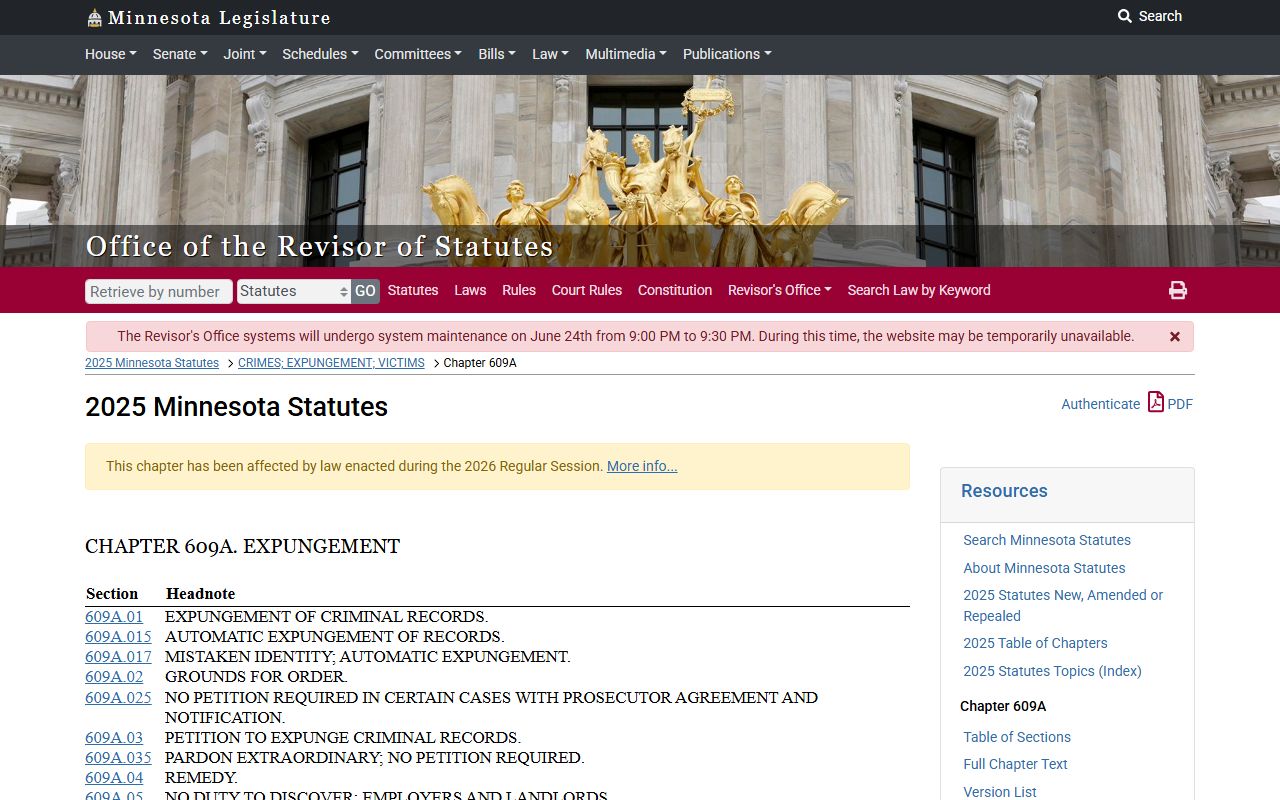
Expungement should be described as sealing and restricted disclosure, not as a guarantee that every agency record is destroyed.
Public Access to Chisago Criminal Records
Public access to Chisago County criminal court records is controlled by Judicial Branch rules and statutes, with local case access anchored at Chisago County District Court. Rule 4 identifies public and non-public judicial case records. Rule 8 controls inspection, copying, bulk distribution, and remote online access. Remote MCRO access is narrower than courthouse access, so the courthouse terminal or Court Administration may be needed even when a record is public.
Juvenile delinquency records are generally confidential. Minnesota Statutes section 260B.171 governs juvenile court legal records, with limited public access in certain felony matters involving juveniles who were at least 16 at the time of the alleged offense. Domestic abuse, harassment, child protection, civil commitment, and sealed records also have limits that can affect what appears in a Chisago criminal-record search.
The automatic expungement eligibility statute is relevant when a Chisago County criminal court record no longer appears in public search.
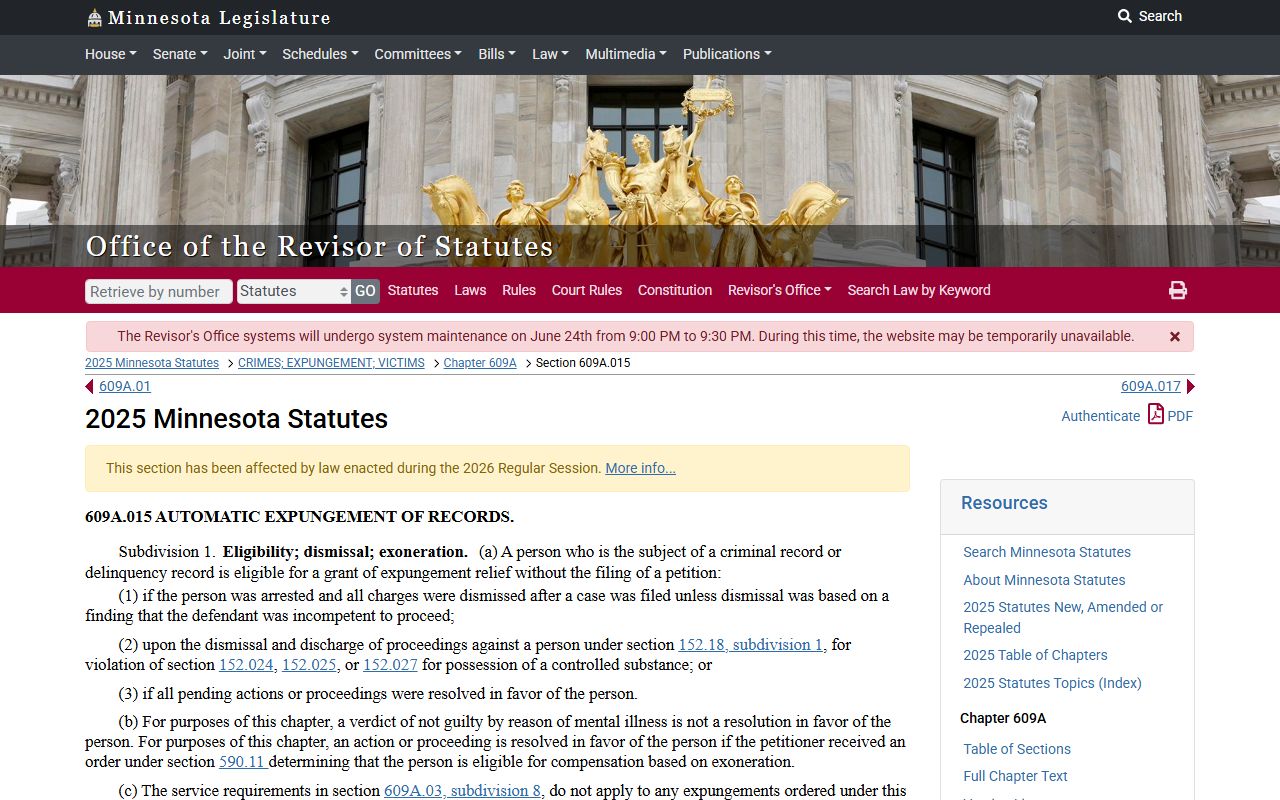
Automatic eligibility does not mean every case is public today or that every record is sealed without checking the current court file.
Restricted Chisago Criminal Records
The most important restricted category for Chisago County criminal records is juvenile delinquency. The Judicial Branch juvenile page explains confidentiality and limited public access rules. MCRO also excludes D16 and CHIPS case types from remote access. If a case is sealed, expunged, confidential, or not available through remote access, public searches may return no result even though a court or agency record exists under restricted access.
The grounds for expungement statute and related prohibited-expungement rules shape which criminal records may be sealed.
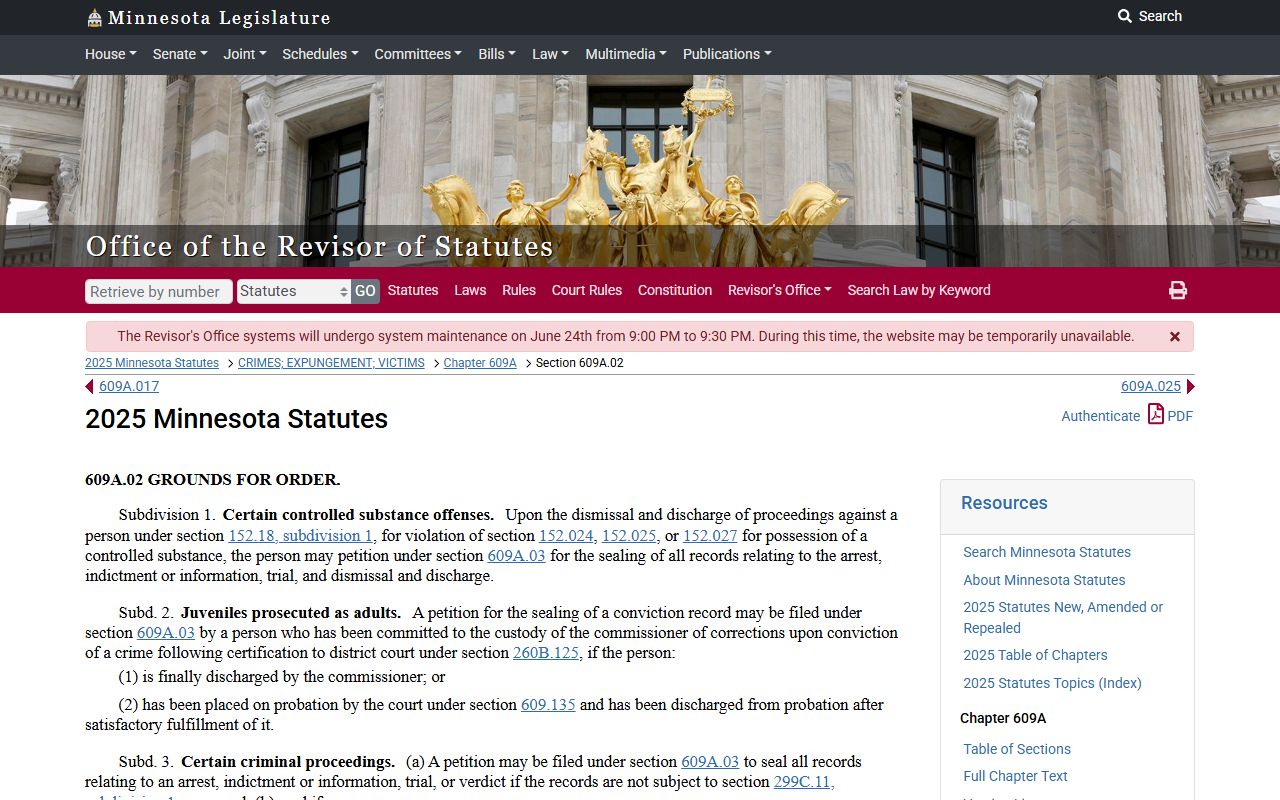
The court's actual order or statute should be checked before treating any Chisago County criminal case as publicly available or sealed.
The Judicial Branch criminal expungement FAQ provides public-facing context for Minnesota expungement.
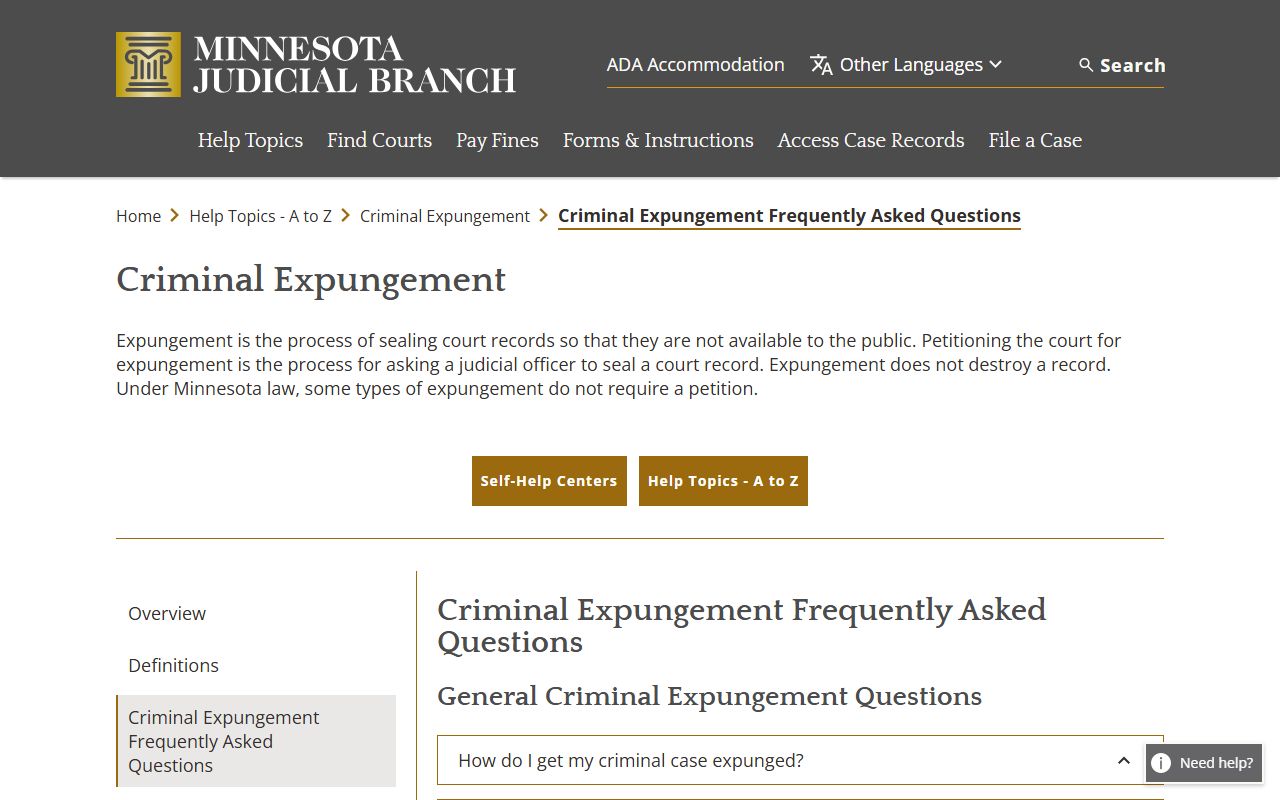
The FAQ is a practical supplement to the statutes, especially where a person needs to understand sealing rather than just search fields.
The Judicial Branch juvenile delinquency page is the source for confidentiality and limited public-access notes.
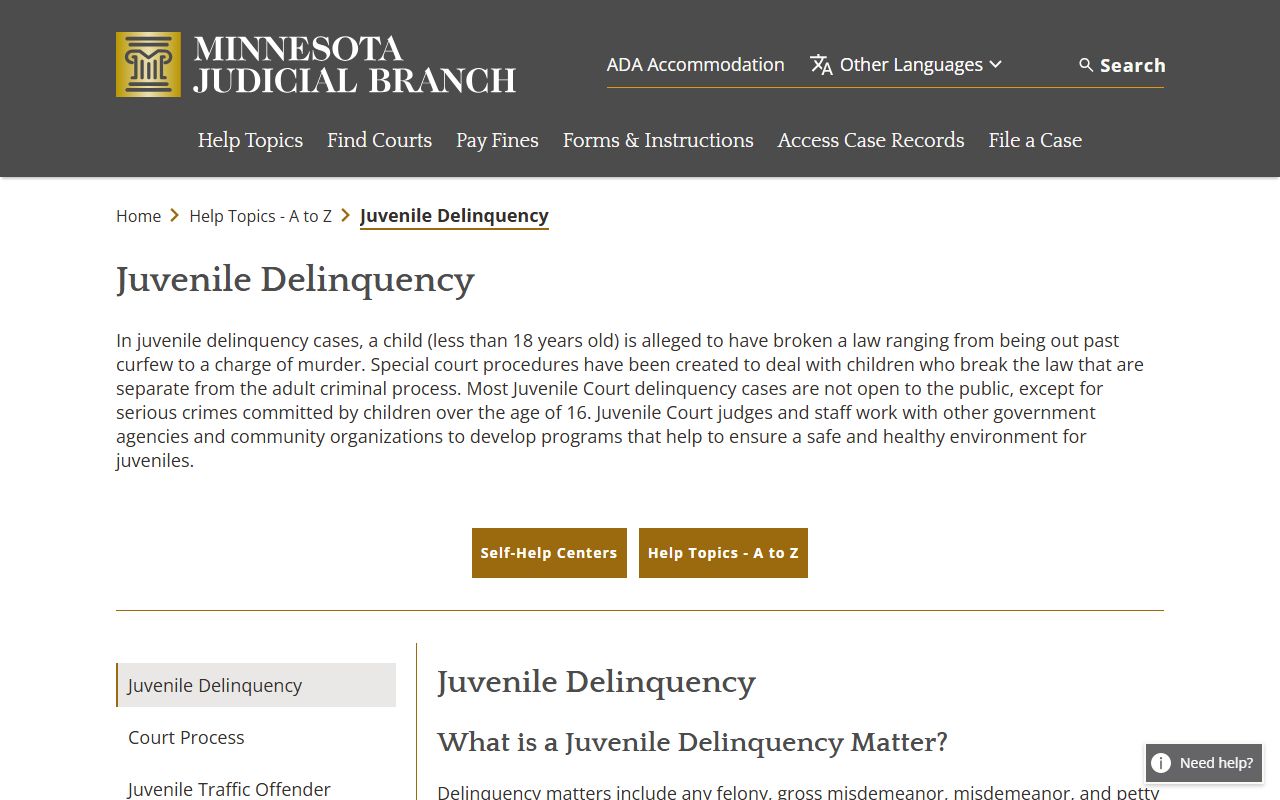
Juvenile limits are a major reason a Chisago criminal-record search may be incomplete from a public remote portal.
Public Defender and Case Access
The Minnesota Judicial Branch public defender page says a person charged with a misdemeanor, gross misdemeanor, or felony with possible jail time may ask for appointed counsel if the person cannot afford an attorney. The best time to ask is at the first court appearance or before. Chisago research notes that a public defender application must be obtained from Court Administration, completed truthfully, and verified; if the court finds the person cannot afford counsel, a public defender is appointed.
Public defender eligibility does not make a criminal court record private. It is a case-participation issue, not a public-access classification. The public record may still show hearings, attorney association, motions, dispositions, and sentence entries where public. Private attorney-client communications and defense work product are not part of the public court file.